DARIKODA

Operational intelligence

Mining contractors in Ghana: defend every billable hour

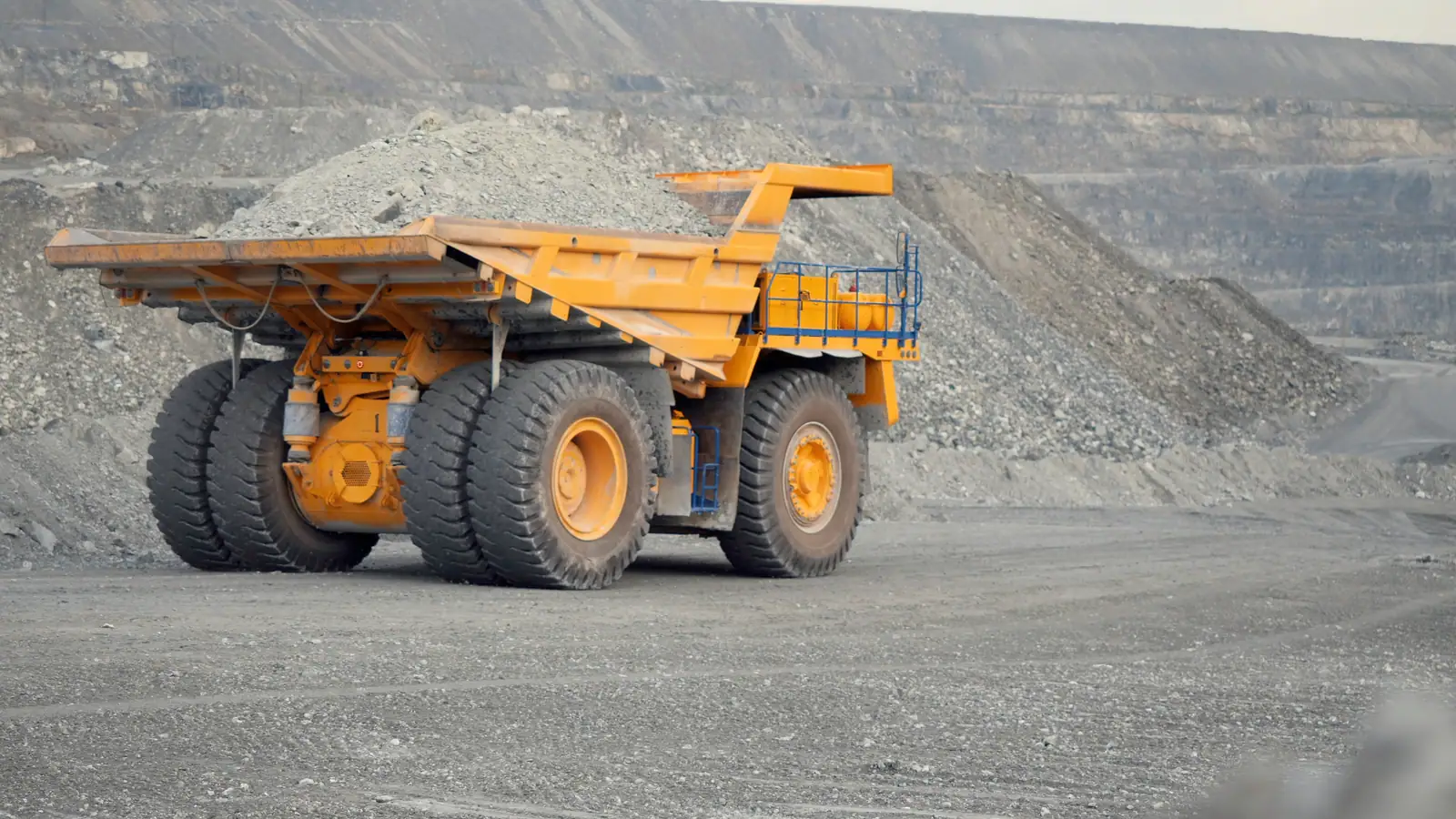
Mining contractor checking machine on Ghana site
Darikoda · Mining contractors Ghana

Defend every billable hour.

You run equipment on someone else's mine. You bill by the hour, the tonne, or the task.

When your evidence is weaker than the mine's, you pay the difference. Darikoda gives you defendable hour-meter, fuel, and availability evidence. Captured at source.

Typical reply within the hour during UK and Ghana business hours

You run equipment on someone else's mine. You bill by the hour, the tonne, or the task. When your evidence is weaker than the mine's, you pay the difference. Darikoda gives you defendable hour-meter, fuel, and availability evidence, captured at source.

Where the evidence breaks

The six places a mining contractor loses money before the invoice is even drafted.

  • Defending billable hours.

    Day-works billing means hours equal revenue. Hour-meter readings need to be captured at events the client can verify, not reconstructed at month-end. The QS who signs your invoice should be looking at the same record you do.

  • Fuel evidence at the mine's bowser.

    The mine stores and dispenses. Your operator writes what was received. When your operator is absent at the event, the mine's number becomes the default. One of your largest cost lines, weakly evidenced at source.

  • Hired vs owned cost visibility.

    A hired excavator at GHS 84K/month deserves a hard answer at renewal. Without per-asset operating cost against revenue, renew-or-replace is instinct, not decision.

  • Servicing delays and parts lead times.

    Critical wear items from Tema with two-week lead times erase productive hours before the loss is visible in a month-end summary. Visibility on the workshop bottleneck moves the conversation forward.

  • Mechanical availability the client can verify.

    Availability is your defence against client pressure. Without per-asset uptime evidence, the client's number wins the dispute.

  • Compliance the regulator can read.

    Minerals Commission certification, safety reporting, insurance records. All of it needs a defendable record trail. The record is the evidence, not the explanation.

What changes between paper and structured

Three scenarios. Three places your record outranks theirs.

Old way

Your operator's log says 9 hours. The mine's QS log says 7. The QS asks for proof. You have a notebook entry with no timestamp, no GPS, no operator PIN. The 2-hour gap walks. At day-works rates, that is roughly USD 260 absorbed per machine on that single dispute.

On Darikoda

M-04. Start 09:12, stop 18:23. Operator Kwame, PIN-attributed. GPS confirms the position throughout. 9.18 billable hours. The QS sees the same time-stamped record you do. The conversation happens with evidence rather than memory.

6 hours / month

the protection threshold that covers the pilot fee at typical Ghana day-works rates.

Old way

Your operator is on another machine when the fuel event happens. The mine writes 320L. Your monthly reconciliation shows the discrepancy three weeks later. The receipt is unsigned. You absorb the variance.

On Darikoda

320L dispense. Operator PIN at the event, even if it is the standby operator. Photo of the pump reading. GPS-confirmed. Time-stamped. If you challenge the number, you have the record. If you cannot challenge, the gap is at least explicit rather than silent.

USD 5K / month

five percent recovery on a USD 100K monthly diesel spend. One line item.

Old way

The excavator costs GHS 84K/month to hire. Is it earning that back? The GM thinks yes. Finance thinks no. The renewal happens on instinct rather than evidence. Three months later it is obvious the wrong call was made.

On Darikoda

Per-asset cost-per-tonne. 73% above the owned-fleet benchmark on the same route. The renewal conversation has a number behind it. Renew or replace becomes a decision rather than a feeling.

Per-asset visibility

renew-or-replace evidenced live, not reconstructed from three weeks of spreadsheet pulls.

Different scenarios. Same underlying gap. Same closing move.

Three engines applied to your operation

The same operating record, framed for a mining contractor.

ENGINE 01

Defendable hour-meter and availability.

Every billable hour timestamped at start and stop. Operator PIN attribution. GPS-confirmed position. The QS sees the same record you do, before the deduction conversation starts.

ENGINE 02

Fuel reconciliation at the mine's bowser.

Every dispense captured against operator, asset, quantity, and time at the event. If your operator is present, the record matches. If absent, the gap is explicit, not silent. Structured capture turns the bowser into the strongest evidence line in your record, not the weakest.

ENGINE 03

Per-asset cost evidence for renewal conversations.

Cost-per-hour. Cost-per-tonne where you carry production risk. Per asset, not per fleet. The hired excavator that is bleeding shows up before the renewal lands, not after.

Proof point

Protecting roughly six billable hours a month covers the pilot fee. At day-works rates of USD 130-138 per hour, the maths is concrete and small.

Built so your QS handover survives the cut.

Mining contractor workflows live or die on the integrity of the record at the moment the work happens. Six operational commitments make that record survive the trip from pit to cert.

  • Every billable hour saves locally first and syncs when signal returns. Operators do not wait for 4G to log start, stop, or operator change.
  • Every fuel event has a sync state: saved, queued, synced, failed. No silent gaps between your record and the mine's reconciliation.
  • Every action is attributed to a PIN-level operator, a machine, a contract, and a time. No reconstruction. No memory dispute.
  • Shared tablets use PIN-level worker attribution. No one is logged in as someone else when the fuel event happens.
  • Failed syncs at remote pit sites become visible issues, not silent gaps in the cert pack.
  • Finance and the mine's QS see the same record. Your existing accounting or ERP gets fed the per-machine truth it cannot produce on its own.

If you do nothing

The cost of one more month on the paper tally.

The numbers below are illustrative. The Operational Audit produces your specific number against your fleet, your contract structure, and your reporting cadence.

Scenario 01

6 disputed billable hours per machine per month.

6 hours × USD 130/hour × 12 months = USD 9,360 absorbed per machine per year.

On a 6-machine fleet, that is USD 56,160 per year. On 10 machines, USD 93,600.

Scenario 02

5% fuel variance on monthly diesel spend.

USD 100,000 monthly diesel × 5% absorbed variance = USD 5,000 per month leaking through one line item.

USD 60,000 per year. One supplier conversation, one structured ledger.

Scenario 03

10 idle days per machine per quarter.

Workshop bottlenecks, parts lead times, and absent-operator delays. 10 days × USD 130/hour × 10 productive hours = USD 13,000 per machine per quarter.

USD 52,000 per machine per year just on idle time the workshop did not see coming.

Scenario 04

One bad asset hidden by the fleet average.

The hired excavator at GHS 84K/month producing nothing while the owned fleet covers for it. 4 months × GHS 84K = GHS 336K absorbed before the renewal conversation lands.

Per-asset cost-per-tonne closes that window in week one of the divergence, not at the renewal.

Most contractors recognise at least two of these scenarios from their own month. The audit identifies which one is biggest for you.

Inside a typical month

What a Darikoda month actually looks like.

From operators capturing at the event in week one, to the cert pack landing as an export in week four. Concrete cadence, not theory.

  1. Week 1

    Operators capture at the event, not at the desk.

    Hour-meter start, hour-meter stop, fuel dispense, fault report. Each entry PIN-attributed, GPS-confirmed, time-stamped. Saves locally first, syncs when signal returns. The first week is the discipline week.

  2. Week 2

    First patterns surface on the GM's phone.

    Particular operator, particular machine, particular shift. The variance you suspected for months has a name. What you do with it is the operational decision. The record is the foundation.

  3. Week 3

    QS conversations shift.

    When the mine's QS asks for proof on hours or fuel, you have it before they finish asking. Disputes resolve in minutes rather than days. The cert prep work disappears into the background.

  4. Week 4

    Month-end cert pack already half-built.

    Hours, fuel, availability, faults. Structured per machine, per operator, per shift. The cert pack is an export, not a reconstruction. Two people for a day, not ten for a week.

  5. Month 2 and beyond

    Hire-rate and renewal decisions become evidence-led.

    Per-asset cost-per-hour, cost-per-tonne where applicable. Hired vs owned comparison surfaces the asset bleeding margin. Renew, replace or retire becomes a decision the FD can defend.

A note from Theo

The QS carries the tally. The contractor stands between the two and absorbs whatever the gap reads.

I spent four years at Caterpillar and Unatrac across Ghana and Nigeria heavy fleet operations. The pattern I saw most often on mining contractors was not that the work was not done. It was that the evidence at month-end was not structured enough to defend it. Operators carry the work. The QS carries the tally. The contractor stands between the two and absorbs whatever the gap reads. The operating record is the layer that closes that gap. Hours captured at the event, fuel reconciled at the bowser, availability the mine can verify. The conversation with the QS becomes structured rather than adversarial. That is what we built.

Theo Ilori, founder of Darikoda

Theo Ilori

Founder, Darikoda. UCL MSc Mechanical Engineering. Formerly GE precision turbines, Caterpillar/Unatrac Ghana & Nigeria.

Mining contractor FAQ.

The questions other Ghana mining contractors ask in the first call.

We run a 6-machine fleet on day-works. Is Darikoda overkill?

At day-works rates (USD 130-138/hour typical Ghana), protecting roughly six billable hours per month covers the pilot fee. With 6 machines you have plenty of contact surface with the mine's QS to recover that. The Operational Audit produces the specific number for your operation.

Our operators sometimes miss the fuel event. What then?

The record makes the gap explicit. Operator absent, mine writes 320L, your record shows operator-absent at that event. The gap is documented, not lost. Over time the gaps narrow, because the missing-operator pattern becomes visible and addressable.

The mine uses its own fuel ledger. How do we reconcile?

Darikoda captures your version at the event: operator PIN, photo of the pump reading, GPS-confirmed position, time-stamp. When the monthly reconciliation arrives from the mine, you have a structured record to compare against. Disputes happen with evidence, not without.

Does it replace Cat Product Link or KOMTRAX?

No. OEM telematics handle GPS, hour-meter telemetry, machine-health alerts. Darikoda is the operating record above that. The layer that ties the hours to the contract, the fuel to the invoice, the operator to the performance. We integrate where useful. We do not replace the OEM stack.

How long until we see results?

Fuel variance becomes visible from the first week of structured capture. The first month usually surfaces patterns (a particular operator, shift, or machine) that the GM did not have evidence for. What you do with the pattern is the operational decision. The record is the foundation.

Want the leakage map for your contractor fleet?

30 minutes on WhatsApp. You keep the map regardless of next steps.

← Back to mining operations overview

Patterns described here are drawn from extensive field audits and industry research across Ghana's mining, construction, roadworks, and quarry sectors. No specific operator is named or identifiable.

Message Theo to book the audit