
Darikoda · Mining subcontractors Ghana
Get paid for what you actually did.
Keep completed work and client acceptance together.
A work pack is only as strong as its acceptance.
- 01
Work recorded
Task complete
Location and work description attached
- 02
Acceptance
Still needed
Client acknowledgement is missing
- 03
Claim
Ready for review
Resolve the gap before submission
What this example showsUnderstand the scope and limits of this illustrative example.Check the example context Close section
A work record supports the conversation. It does not by itself establish acceptance or payment.
You supply machines or crews into a bigger operation. Your invoice meets their deductions every month.
Darikoda gives you the hour, fuel, and output evidence to defend what you billed. Captured at source.
At a glance
You supply machines or crews into a bigger operation. Your invoice meets their deductions every month. Darikoda gives you the hour, fuel, and output evidence to defend what you billed.
Mining / Subcontractor
One record. Three acts. Scroll it.
The same operating record, morphing as you scroll: the gap you carry made visible, the control that closes it, then the record on the other side.
Scroll through the example ↓ · Step 1 of 3
Monthly deduction exposure
22 hrs
GHS 6,400
388 vs 412 m
5
3
22 billed hours and 40 litres are unevidenced at the exact moment the contractor's QS measures them.
Where the QS handover walks
The places a mining subcontractor pays the difference between their record and the contractor's.
Hours you worked versus hours you billedSee why this matters Close section
Day-works billing means hours equal revenue. If your evidence is weaker than the contractor's count at month-end, the difference walks. Drilling, blasting and crew shifts need start-stop timestamps captured at the event.
Fuel against the contractor's deductionSee why this matters Close section
Fuel is usually supplied by the contractor and deducted from your payment. When your record of receipt is verbal or paper-based, the deduction reads whatever the contractor's count says.
End-of-shift handover that survives the QSSee why this matters Close section
A defendable, time-stamped log of work done you can hand to the contractor's QS at end-of-shift. Not three days later. Not reconstructed from memory. The QS sees the same record you do.
Output evidence for measurement disputesSee why this matters Close section
Metres drilled, holes blasted, bowser loads delivered, tyres serviced. Output captured per shift, per operator, with GPS attribution. The disputed number stops being your word against theirs.
Operator attribution on shared machinesSee why this matters Close section
PIN-level worker attribution. When one operator runs the rig today and another runs it tomorrow, the hours, the fuel and the output stay attached to the person who did them. No one is logged in as someone else.
Reputation evidence for the next contractSee why this matters Close section
Your operating record is the case for the next tender. Cleanly captured shift logs make you the subcontractor the contractor calls first, not the one whose paperwork costs them a week of QS time. As more surface-mining work moves to Ghanaian-owned operators, the subcontractors with clean, evidenced records are the ones who keep their slot.
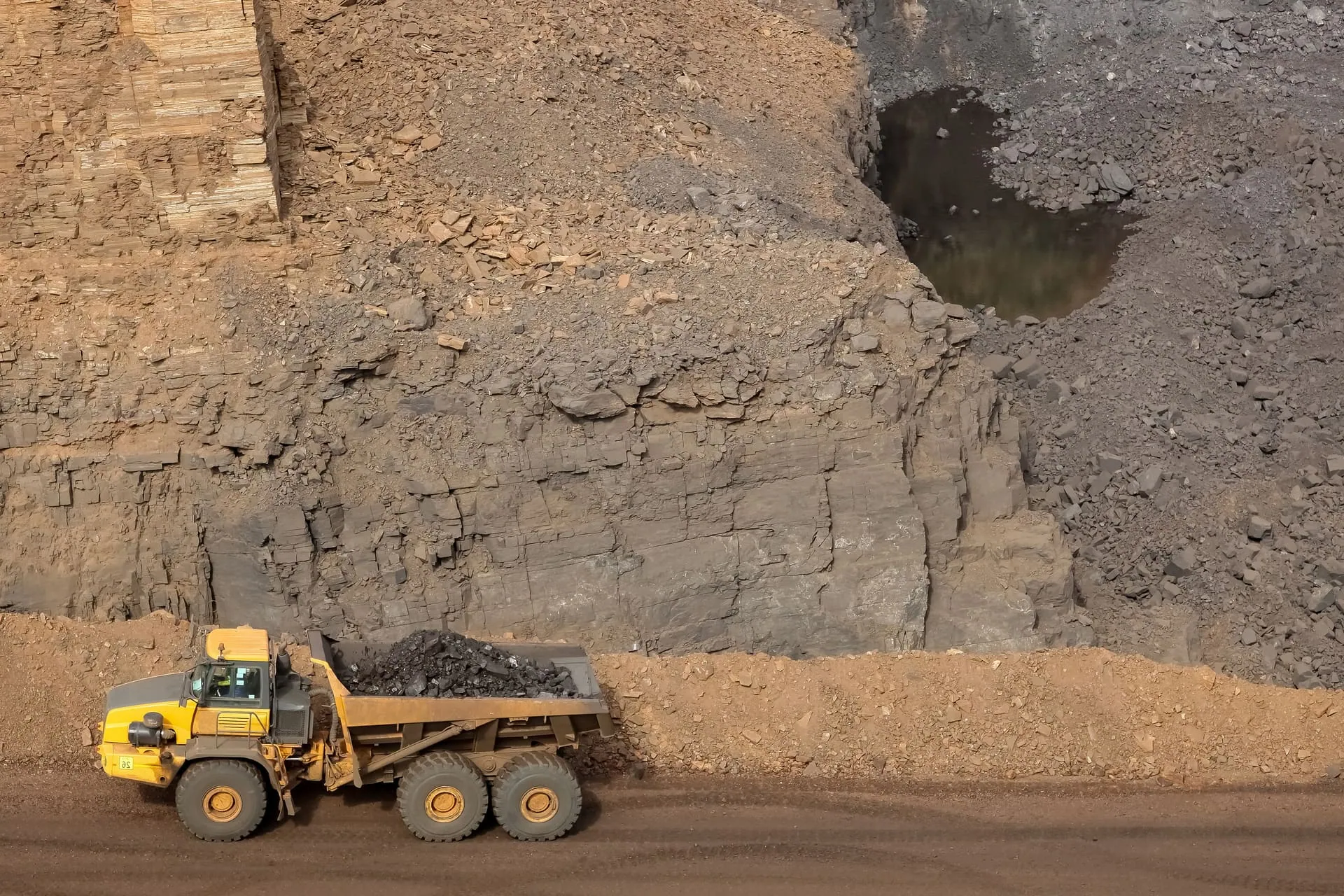
Captured at source. Defended at handover.
Hours, fuel and output logged at the event, so the end-of-shift handover to the contractor's QS happens with evidence, not recollection.
What changes at the moment of dispute
Two scenarios where the QS handover changes everything.
Worked scenarios show how evidence changes a decision. They are illustrations, not published customer outcomes. (Illustrative model, your number from the audit.)
01 / End-of-shift handover to the contractor's QSCompare the old way with a recorded workflow and inspect the assumptions.Compare the worked examples Close section
Hours and metres logged in a notebook. The QS arrives at end-of-shift wanting numbers. Your operator is on the next hole. Recollection becomes the record. Three days later, two of the holes show short on the count.
Operator PIN at start, operator PIN at stop, output count, GPS, time-stamp, photo. The QS opens the same record you do. The handover happens in 60 seconds with structured evidence rather than a memory test.
End-of-shift
the moment the dispute is cheapest to resolve.
02 / Fuel deduction from the contractor's countCompare the old way with a recorded workflow and inspect the assumptions.Compare the worked examples Close section
Contractor's fuel ledger says 420L drawn by your crew this week. Your operators say 380L. Difference deducted. You absorb the 40L because the receipt evidence is verbal.
Each dispense PIN-attributed to your operator, time-stamped, photo of the pump reading. When the deduction conversation lands, the variance has structured evidence on your side.
Per-dispense receipt
the unit at which deduction defence becomes possible.
Different scenarios. Same underlying gap. Same closing move.

The shift log is the pay cheque.
Drilling metres, bowser litres and crew hours, attributed at the event and ready before the measurement conversation starts.
Built so the QS handover survives the contractor's measurement.
You get paid for the work you can prove. Everything below exists to keep that proof intact from shift to cert.
- Every shift entry saves locally first and syncs when signal returns. Remote drill sites do not wait for connectivity.
- Every operator at the controls leaves a PIN-attributed trail. The hours and output stay attached to the person who did them.
- Every fuel receipt carries a photo and a GPS-confirmed position. The deduction conversation has structured evidence rather than memory.
- Failed syncs become visible issues, not silent gaps in the monthly QS handover.
- The cert pack you hand the contractor's QS exports to PDF or CSV in the format their workflow expects.
Inside a typical month
What a Darikoda shift looks like for a subcontracted crew.
From operator PIN at start of shift to a defendable monthly cert pack.
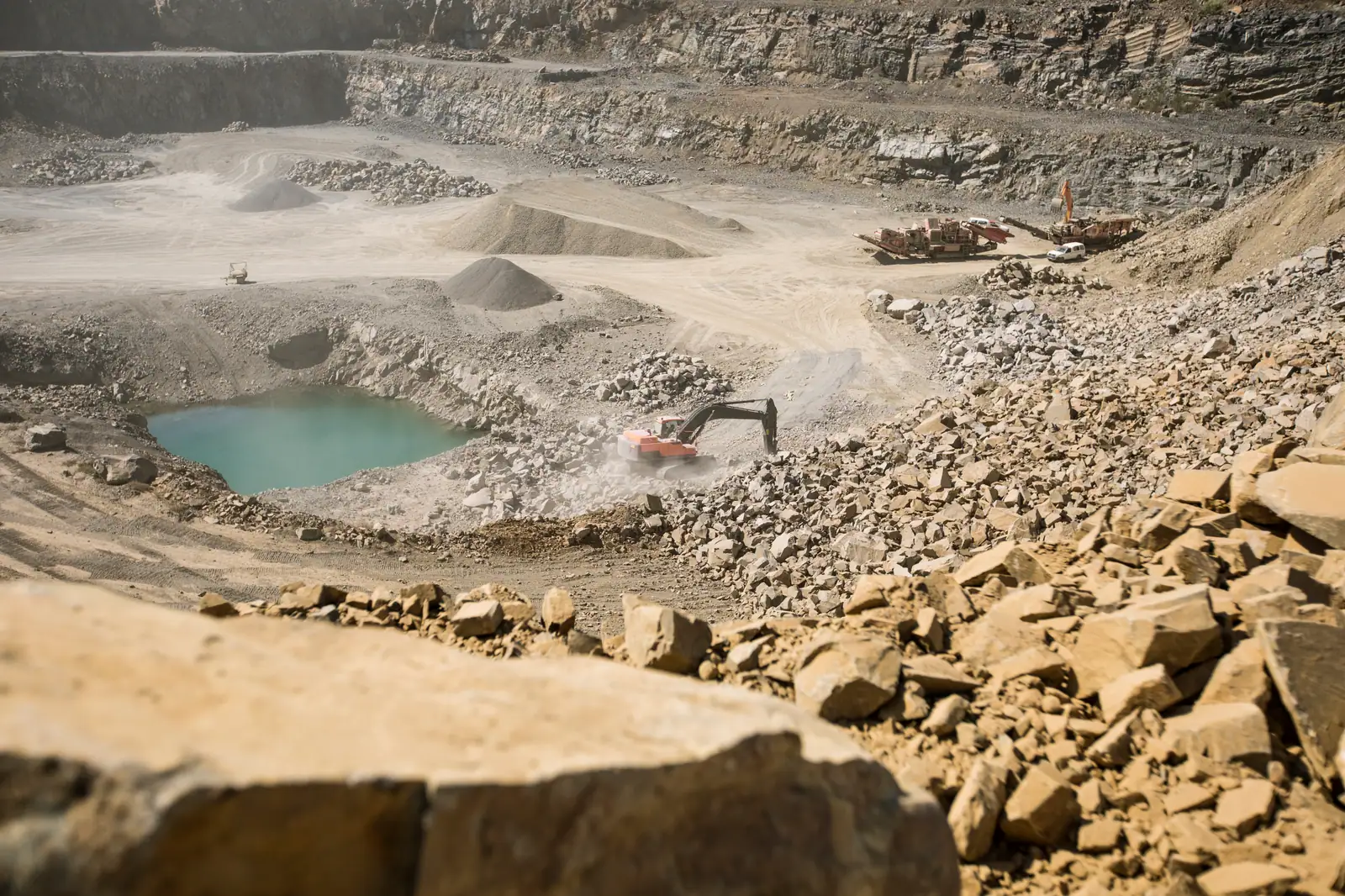
01 / Shift start
Operator logs in at the tablet, PIN-attributed
Machine, project, hour-meter start. The shift begins with a structured record rather than a notebook line.
02 / During the shift
Output and fuel captured at the event
Metres drilled or holes blasted, fuel receipts with photo and GPS, fault reports. Each entry attributed to the operator at the controls.
03 / Shift end
End-of-shift handover to the contractor's QS
Hours, output, fuel, faults exported in seconds. The QS signs against structured evidence rather than reconstruction.
04 / Month-end
Monthly cert pack already built
The cert submission is a tidy export of structured shift records, ready for the main contractor's measurement cycle.
Example operating cadence after activation. Rollout timing and acceptance criteria are agreed for your operation.
Field note from Darikoda
“The contract does not pay for the work you actually did. It pays for the work you can prove you did.”
Read the field context and attributionSee where this observation comes from and the context behind it.Read the field context Close section
The mining subcontractors we work alongside in Ghana share one operational reality. The contract does not pay for the work you actually did. It pays for the work you can prove you did. The gap between those two numbers is where small subcontractors absorb most of their leakage, and the gap closes when the evidence is captured at the event rather than reconstructed at month-end. The operating record is the unit that closes it. PIN, GPS, time-stamp, photo. Five extra seconds per event. A defendable monthly cert pack at the other end. Darikoda is built around exactly that trade.
Darikoda Systems Ltd
Founder-led, engineer-built. UCL MSc Mechanical Engineering. GE precision turbines. Four years inside Caterpillar and Unatrac heavy fleet operations across Ghana and Nigeria.
Mining subcontractor FAQ.
The questions other Ghana mining subcontractors ask in the first call.
We are a 3-asset drilling crew. Is Darikoda overkill for us?Read the answerClose answer
No. Smaller subcontractors (drilling crew, blast crew, water-bowser fleet, tyre service crew, 1 to 5 assets) typically use Darikoda for one specific thing: a defendable, time-stamped log of work done that you can hand to the contractor's QS at end-of-shift. That is a tighter use-case than the full operating record we build for contractors and full miners, but the same architecture supports it.
How does the platform handle remote pit sites on patchy 4G?Read the answerClose answer
Every field write saves locally first and syncs when signal returns. Operators do not wait for connectivity to record an hour-meter, a fuel event or a fault report. Failed syncs become visible issues, not silent gaps.
What if the contractor refuses to look at the digital record?Read the answerClose answer
The record exists regardless. You can print or export it as a PDF for QS submission, share it via WhatsApp, or include it in your monthly invoice pack. The digital record makes the deduction harder to dispute, because the evidence is structured and time-stamped rather than reconstructed.
Does it replace Cat Product Link or KOMTRAX on our machines?Read the answerClose answer
No. OEM telematics handle GPS and hour-meter telemetry on machines that have it. Darikoda is the operating record above that. The layer that ties machine hours to the contract, the fuel to the deduction, the operator to the shift. Telemetry where it exists is additive.
From the Operating Notes
Field analysis that goes deeper on this.
Want the leakage map for your subcontracted operation?
30 minutes on WhatsApp. You keep the map regardless of next steps.
Patterns described here are drawn from extensive field audits and industry research across Ghana's mining, construction, roadworks, and quarry sectors. No specific operator is named or identifiable.