The shift starts with a name, not a guess.
The old way
The office receives a total without a clear asset, operator or shift.
With a connected operating record
Identify the asset and operator at the start, so later events belong to the same shift.
Darikoda · The Category
Connect each site event to a record the office can check.
At the asset
Shift opens
Asset and operator identified
At the event
Fuel received
Issue and receipt attached
At day close
Exception reviewed
A named action, with the source in view
Inspect the event behind the summary. A total without its source cannot settle the question.
Operational intelligence is achieved by maintaining an immutable operating record.
The operating record is the structured, time-stamped, attributed history of what actually happened on site. Every fuel event. Every machine state change. Every approval. Every piece of certificate evidence. Every cross-hire deduction.
The intelligence is what you derive from the record: per-machine cost, per-shift truth, per-cert defendability, real-time across every project. You cannot have the intelligence without the record. The record without the intelligence is just data.
See what changes
One shift. A record the office can follow.
The office receives a total without a clear asset, operator or shift.
Identify the asset and operator at the start, so later events belong to the same shift.
A fuel total arrives separately from the delivery and receipt records.
Attach the issue and receipt to the event. The office can inspect what the total means.
People chase an explanation after the summary has circulated.
Review the source record and assign a named action while the question is still visible.
Inspect the event behind the summary. A total without its source cannot settle the question.
At a glance
Operational intelligence software creates an immutable, time-stamped operating record of what happened on site. For Ghana's fleet-heavy operators, this means defending fuel reconciliation, mechanical availability, cert evidence, and approval cycles against the gap between site reality and office reporting.
Definition
In plain terms: Darikoda creates the trusted field record your ERP, tracker, and finance team currently rely on people to reconstruct.
This is why operational intelligence does not replace your ERP, your telematics tracker, your CMMS, or your BI dashboard. It sits underneath them and feeds them the per-asset, per-shift truth they cannot produce on their own.

One record of what actually happened on site, that still holds up when the QS arrives, the deduction lands, or the rate is renegotiated.
Operational intelligence is often confused with adjacent tool categories. Each of those tools does its own job well. None of them are the operating record.
ERP / accounting system
Does well
Invoices, assets, depreciation, financial transactions
Doesn't see
What happened on site at the moment the work happened
GPS tracker / telematics
Does well
Location, basic utilisation, sometimes fuel
Doesn't see
Per-machine cost, operator attribution, maintenance history, approvals trail, certificate evidence, deduction defence
OEM telematics (Cat Product Link, KOMTRAX)
Does well
Single-OEM machine-health data
Doesn't see
Mixed-fleet visibility, manual fuel events at the bowser, parts and consumables, contract-level financials
CMMS / maintenance system
Does well
Work orders, scheduled maintenance
Doesn't see
Fuel integrity, operator behaviour, approvals, payment evidence, hire-deduction defence
Business intelligence (Power BI, Tableau)
Does well
Aggregating and visualising data from other systems
Doesn't see
Capturing data at source, structuring field reality, attributing actions to operators in real time
Operational intelligence (Darikoda)
What it is
The operating record, fuel, machine, downtime, certificate, approval and cross-hire cycles, attributed at source. The layer that makes the others credible.
| Tool category | What it does well | What it doesn't see |
|---|---|---|
| ERP / accounting system | Invoices, assets, depreciation, financial transactions | What happened on site at the moment the work happened |
| GPS tracker / telematics | Location, basic utilisation, sometimes fuel | Per-machine cost, operator attribution, maintenance history, approvals trail, certificate evidence, deduction defence |
| OEM telematics (Cat Product Link, KOMTRAX) | Single-OEM machine-health data | Mixed-fleet visibility, manual fuel events at the bowser, parts and consumables, contract-level financials |
| CMMS / maintenance system | Work orders, scheduled maintenance | Fuel integrity, operator behaviour, approvals, payment evidence, hire-deduction defence |
| Business intelligence (Power BI, Tableau) | Aggregating and visualising data from other systems | Capturing data at source, structuring field reality, attributing actions to operators in real time |
| Operational intelligence (Darikoda) | The operating record, fuel, machine, downtime, certificate, approval, cross-hire cycles, attributed at source | (this is the layer that makes the others credible) |
Not in the office. In the hours, litres and loads that either get captured at source or get reconstructed from memory weeks later.
Dispensed at the bowser, consumed by the machine, reconciled at head office. Three handovers. Three places the number can drift.
Assigned to a project, worked through a shift, stood down for parts or weather, repaired and returned. Four states. Most operations only track the first.
Diagnosed, waiting parts, repairing, testing. Most operations track downtime as one number, so they cannot see whether the real problem is procurement, scheduling, workshop capacity, or repair time.
Measured (joint with consultant), evidenced (BoQ), submitted (IPC), defended (when the consultant cuts). Cert speed is cash flow. Cert defensibility is margin protection.
Requested (WhatsApp), approved (GM), delayed, costed. Most operations cannot see the cost of an approval delay until it has already lost them money.
Plant hired in or out, machine hours and fuel sitting in two separate records. When they do not match at month-end, the reconciliation becomes a dispute and someone absorbs the gap.
Bought. Delivered. Issued. Consumed. By month-end the variance has already stopped a crew, started a supplier dispute, or shown up in the wrong number.
01 / The Gap
Every fleet operator we sit with tells us the same thing. Something is leaking. Fuel numbers don't add up. Certs run three weeks late. A dozer sat two months and no one can say why. You feel the money walking out. You can't point at it.
You've done the sensible things. A good GM. Trackers on the trucks. An ERP at GHS 150K a year, sold to you as total visibility. Two years in, you're still asking finance to pull a spreadsheet.
Your ERP was built for accounts. Invoices, assets, depreciation. Your question is different.
No tool you own was built to answer that.
What you see
Your tracker shows the truck moved.
What you don't
Not that it left full and came back empty.
What you see
Your ERP shows GHS 185,000 on parts last quarter.
What you don't
Not that 40% went to two machines you should have retired two years ago.
What you see
Your spreadsheet shows the dozer came back to site.
What you don't
Not that it sat six weeks waiting for a job no one assigned.
What you see
Your supervisor says no downtime.
What you don't
Your workshop has four machines waiting for parts.
What you see
Your cert takes three people a week.
What you don't
The data was ready two weeks earlier.
Every card above is real. Anonymised.
That's what Darikoda was built to fix.

Not in the digging. In the gap between what the site did and what the month-end record can prove.
The shape of the leak
GHS 1M
Illustrative 5% recovery on a GHS 20M annual fuel spend.
(Illustrative model, your number from the audit.)
Pays for itself
The recovered leak covers the work. The audit gives you the exact number for your fleet, sized against what you stand to recover.
2 people, 1 week
Month-end cert pack as an export. Two people for a week, not ten for a month.

The informal system runs on trust, memory, and everyone knowing each other. Then you win a second contract, the fleet grows, or a new site opens. Here are six places where the informal system quietly fails.
Illustrative workflows and timing examples, not measured customer results or service guarantees. (Illustrative model, your number from the audit.)
Not in this file
try the other four spreadsheets?
Payment cert PRJ-TEMA Ch. 12+400 to 14+200
Fuel top-up 420L M-04 Kwame
GHS 3,108, who signs off?
Fuel top-up 420L M-04 Kwame
GHS 3,108 within limit

Six moments on their shift where paper dies and margin comes back.
Three are how the day grinds for one person on shift.
Three are how the month falls apart between people at the office.
Evidence: reconstructed from memory, gaps in the log.
Evidence: 47 work orders, 12 dispense logs, GPS-confirmed.
Six small shifts. One compound effect. The kind of time and cash that stops leaking once the record is in place. (Illustrative model, your number from the audit.)
Times compound. Supervisors stop chasing paper. Approvers stop dodging calls. Finance stops begging for data. The business starts running like a system.
Explore the evidence gaps, management decisions and commercial measures behind the record.
From the field
The leak is rarely where the spreadsheet says. It hides in the gap between what happens on site and what reaches the office. Across mines, quarries, road and construction sites, the pattern repeats.

Fuel that leaves the bowser but cannot be tied to the machine that burned it. Parts and tyres bought with no proof of what they returned. A cost per tonne or per hour nobody fully trusts.
The work was done. The other side's record says less. Hours, litres and quantities walk at every reconciliation, because the dispute is settled by whoever holds the structured count, not by who did the work.
Which machine earns and which one bleeds. What a project actually cost to run. Most operators cannot say, because the numbers to answer it were never put together.
More approval requests than one person can track, most of them on WhatsApp. A cheap part waits days for sign-off while the machine it belongs to stands idle.
When the operator does not own the asset, the wear sits on no one's record. It shows up later as higher maintenance and machines retired early, quietly capping a margin nobody can explain.
The fleet looks busy on average. Split it by machine class and you find one type sitting idle while a single bottleneck holds up everything behind it.
A fuel log a supervisor keeps by hand. A materials count someone invented. The discipline that lives in one experienced head walks out the door when they do, and takes your only control on the biggest cost lines with it.
Most operations software is pretending to work.
Not because it is bad software. Because your ERP, your trackers and your dashboards cannot see what happened in the field: who ran the machine, what it produced, what it burned. The licence renews while the real record stays in heads, on paper, and in WhatsApp. That gap is not a software failure. It is the layer no one built, and it is the layer Darikoda is.
One operating record, seen through your lens
Scroll through the examples or choose your operation. Find the questions that matter to you, then open the view for your role.
Scroll through the examples ↓ 1 of 4
184 / 184
Fuel dispenses captured at source
Fuel variance surfaced to review
BGHS 18,420
Fuel variance exposure
BGHS 61,500
EX-22 coolant
C103 C
EX-22 excavator
Health alertCoolant climbed from 90 to 103 C across the shift. Three health alerts open on the asset.
USD 285,000
Money at risk from time, Parkview Phase 2
Spend ratio, EAC
C108%
Forecast profit
C-USD 115,000
Margin erosion
B-USD 287,000
Parkview Phase 2
SPI 0.79SPI 0.79, 19 days late. USD 132,000 exposure on the flagged phase, driving the loss.
GHS 82.40
Cost per usable tonne, TR-07
Fleet idle
C43%
Addressable idle hrs
B1,240
Idle exposure
BGHS 310,000
CR-02 crusher
Health 58Health score 58, an open alert. Waiting on parts for about 260 days while output runs down.
USD 64.20
Best lifetime cost per hour, OEM A
OEM B per hour
CUSD 88.50
Addressable idle
C19%
Owning cheaper
C4 of 5
OEM A grader
Best valueOwning works out cheaper than hiring on four of five assets on the current fleet.
Mining
Choose your role
Construction
Choose your role
Civils & Roadworks
Choose your role
Plant & Equipment Hire
Choose your role
The real reason this matters
Without the right systems, running your own fleet can quietly cost more than handing the work to subcontractors. That is the leak at its largest: the point where an operator gives up margin just to escape the management burden. Darikoda turns weak field evidence into protected margin, so self-operating stays the profitable choice as you scale.
Margin per fleet, hire vs own
(Illustrative model, your number from the audit.)
What the operating record shows you, live:
1 day
Cert packs that come together in a day, because the field evidence is already structured.
GHS 18,420
Illustrative modelled caseFuel variance surfaced to review the day it appears, at source, instead of absorbed into operational noise.
1,240 hrs
Illustrative modelled caseWhich part of downtime is really the largest, broken down instead of logged as one number.
4 of 5
Hire-versus-own and renewal decisions made on per-asset evidence, not memory.
184 / 184
Disputed deductions defended with evidence captured at the event, not paper timesheets reconstructed at month-end.

Your specific number depends on your fleet, your contracts, and your current baseline. The Operational Audit produces it.
Cost attribution, downtime structuring, fuel integrity. Each expresses differently per vertical, but the architecture underneath is the same.
Cost per output unit, captured at the moment of the output. Cost per tonne in mining, per cubic metre in construction, per chainage metre in civils, per billable hour in plant hire. Live, not lagged. Per machine, per operator, per shift, per project.
Diagnosed, waiting parts, repairing, testing. Tracked at component level, not as one aggregate downtime number. The real bottleneck stops hiding inside a single breakdown figure, so it can finally be named and acted on.
Captured at source, wherever fuel changes hands, and tied to the operator, machine and project behind it. The largest single cost line in heavy-fleet operations becomes the most defensible.
Mining, construction, civils, plant hire. Different machines, one gap between what the field did and what the office can account for.
Ghana, specifically
Poor signal connectivity
WhatsApp approvals
Mixed fleets
Site-to-office gap
Delayed reporting
Cert-heavy workflows
Generic operational intelligence software pretends to fit every operation. Darikoda is built to fit yours, not force you into a generic mould.

Each vertical applies the same operating record to its own commercial reality. Click through to the specific buyer brief.
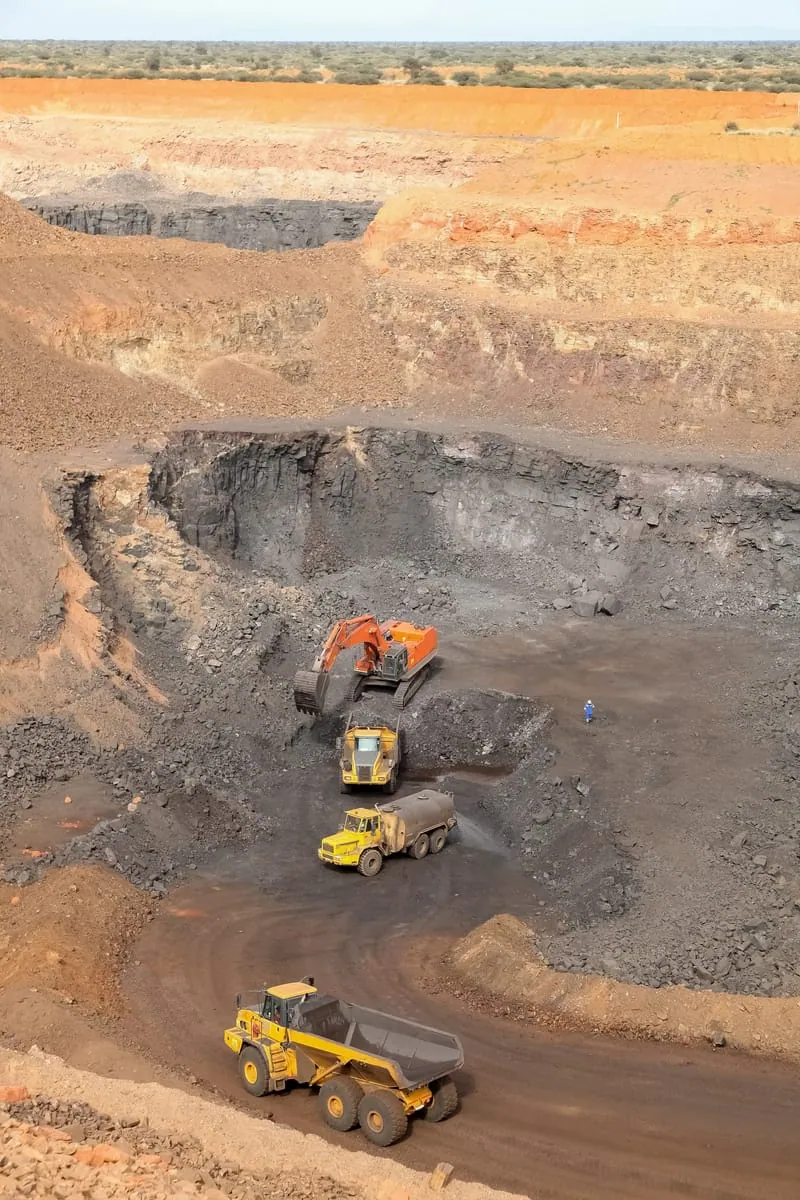
Defending billable hours, fuel evidence at the mine's bowser, mechanical availability per asset, cost-per-tonne and cost-per-ounce visible the moment the work happens, L.I. 2431 procurement-list compliance.
Read the buyer brief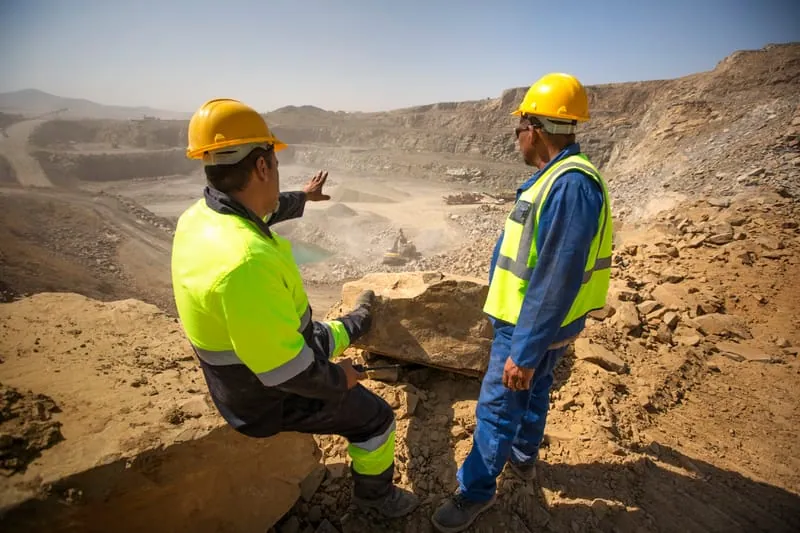
Per-project profitability surfaced before quarterly review, material consumption variance the day it appears, subcontractor coordination at scale, approval cycle visibility, cert preparation that takes 2 people 1 week instead of 10 people 1 month.
Read the buyer brief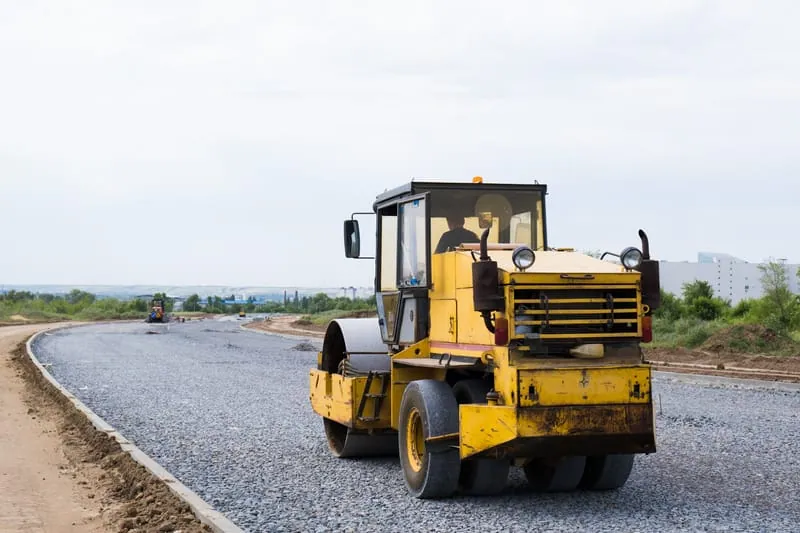
Chainage-level cost visibility, IPC defence under joint measurement, GHA reporting cycles, Big Push delivery discipline, plant utilisation across multiple road projects.
Read the buyer brief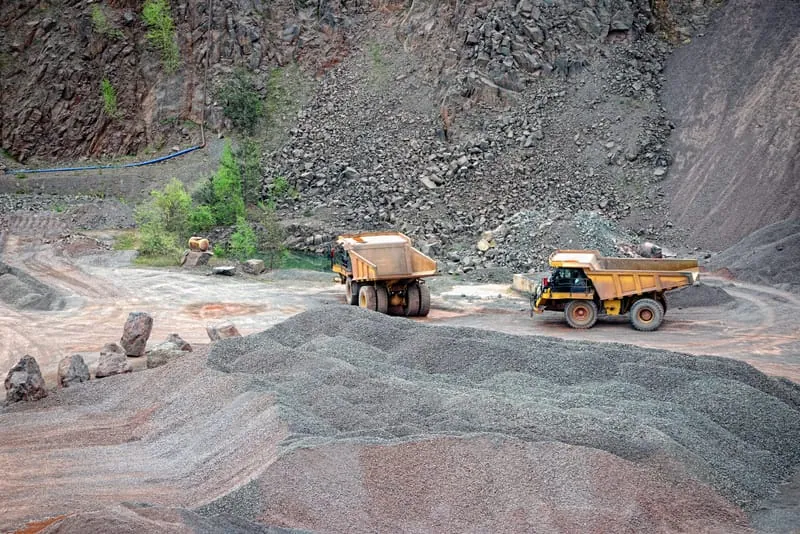
Per-machine utilisation, hire-rate defence, deduction support against subcontractor disputes, redeployment visibility, working / faulty / not needed daily monitoring as a live commercial record.
Read the buyer briefThe cross-vertical reality
Plant hire and fleet-owner businesses serve mining, construction, civils, and quarry clients. Your operating record concerns are the same regardless of which vertical you serve most. That is why Darikoda's architecture is one record, applied per role. The same architecture runs Ghana distribution operations, where the van, the credit book and the daily close-out take the place of the machine, the hours and the cert.
Regulatory context referenced above: the L.I. 2431 procurement list is published by the Minerals Commission (Sixth Edition, January 2025), and the Big Push programme carries a GHC 30.8 billion allocation in the 2026 Budget.
Software that maintains an immutable operating record: the structured, time-stamped, attributed history of what happened on site. The intelligence is what you derive: per-machine cost, per-shift truth, per-cert defendability, real-time across every project. The record is the foundation. The intelligence is the output.
ERP handles financial transactions: invoices, assets, depreciation, GL, AR, AP. It does not see what happened on site. Operational intelligence captures the field reality and feeds the ERP the per-asset, per-shift truth it cannot produce on its own. The two integrate.
Fleet management software (Trackunit, Samsara) handles location, basic utilisation, sometimes fuel telemetry. What it does not carry is the commercial reality behind the machine: which contract the hour belonged to, who ran it, what the work cost, why a deduction is disputed. Operational intelligence is the layer above that ties machine data to commercial reality.
GPS tracking and telematics (Sky Ledge, Cat Product Link, KOMTRAX) capture location, hour-meter, machine-health telemetry. Operational intelligence captures the operator behind the machine, the contract behind the hour, the cost behind the fuel event, the dispute behind the deduction. Telemetry is an input. Operational intelligence is the structured record that makes the telemetry commercially meaningful.
Ghana's operating reality includes L.I. 2431 procurement-list discipline, FIDIC red book joint measurement under GHA, the Big Push pipeline, internal cross-hire on road projects, sliding-scale royalty regime, parts lead times from Tema, Starlink-on-patchy-4G connectivity, WhatsApp as the default approval channel. Generic global tools weren't built for this reality. Darikoda was.
First the operating record is configured to your fleet, contracts, reporting cadence and roles, and signed off only when it is ready for your operation. Then it proves itself in your live contracts before any ongoing commitment. The pace follows your operation, not a fixed clock.
Every operation is priced from its own audit, because the leak and the fleet are different in each one. The free 30-minute audit produces the leakage number for yours, and the figure that matters is what you stand to recover against it. You keep the one-page leakage report regardless of next steps.
From the Operating Notes
The Operational Audit takes 30 minutes. The one-page leakage report identifies which engine your operation is leaking through: cost attribution, downtime structuring, or fuel integrity. You keep it regardless of next steps.
Patterns described here are drawn from extensive field audits and industry research across Ghana's mining, construction, roadworks, and quarry sectors. No specific operator is named or identifiable.