The operating record for road contractors and civils operators in Ghana

The consultant measures the road. The contractor pays for what they cannot evidence.
Cert preparation is cash flow. Cert defendability is margin protection.
Darikoda is the operating record between what your sections produced and what you can defend at month-end. Chainage-level cost, plant utilisation, materials traceability, IPC support. Captured at source.
Darikoda gives Ghana road contractors structured cert evidence under FIDIC red book. Joint measurement support, IPC defence, chainage-level cost, Big Push delivery discipline. Captured at source.
Read the view that fits your seat
Which describes you?
What makes civils different.
Government client. FIDIC red book. Joint measurement with the consultant. Monthly evaluation. Variation orders. Extensions of time. Cash flow exposure. Public scrutiny on Big Push. Audit risk that outlives the work.
The buyer is political: the Ministry, the Authority, the District. The reporting is more formal. The dispute window stays open longer. The number submitted to GHA at month-end is the number paid eight to twelve weeks later. Or longer.

Cert defence is cash flow. Cert defendability is margin.
What the consultant sees, and what you can defend.
What surfaces
Monthly IPC submitted to GHA, chainage K0+000 to K12+400.
What doesn't
The 4% the consultant will cut on K8+200 to K8+900 because your evidence trail stopped at the foreman's notebook.
What surfaces
Asphalt batches delivered to site this week.
What doesn't
Which batch became which 400m section. When the BoQ variance arrives in two months, no one can reconstruct it.
What surfaces
Plant productivity reports across three concurrent projects.
What doesn't
The grader sitting on Site A this week could have unblocked Site C two days ago, where it cost GHS 180,000 in delay.
What surfaces
EOT submission claims 14 wet-weather days this season.
What doesn't
Eight of them have no daily site condition log. The consultant will accept the six that do.
What surfaces
Subcontractor measurement signed off last week.
What doesn't
The drainage crew's claim differs from yours by 47 linear metres at K11+300. The discrepancy becomes a deduction dispute next month.
These are the disputes that show up in the office after the site has already moved on.
ARCHETYPE 1 · LEAD SEGMENT
If you're a government contractor.
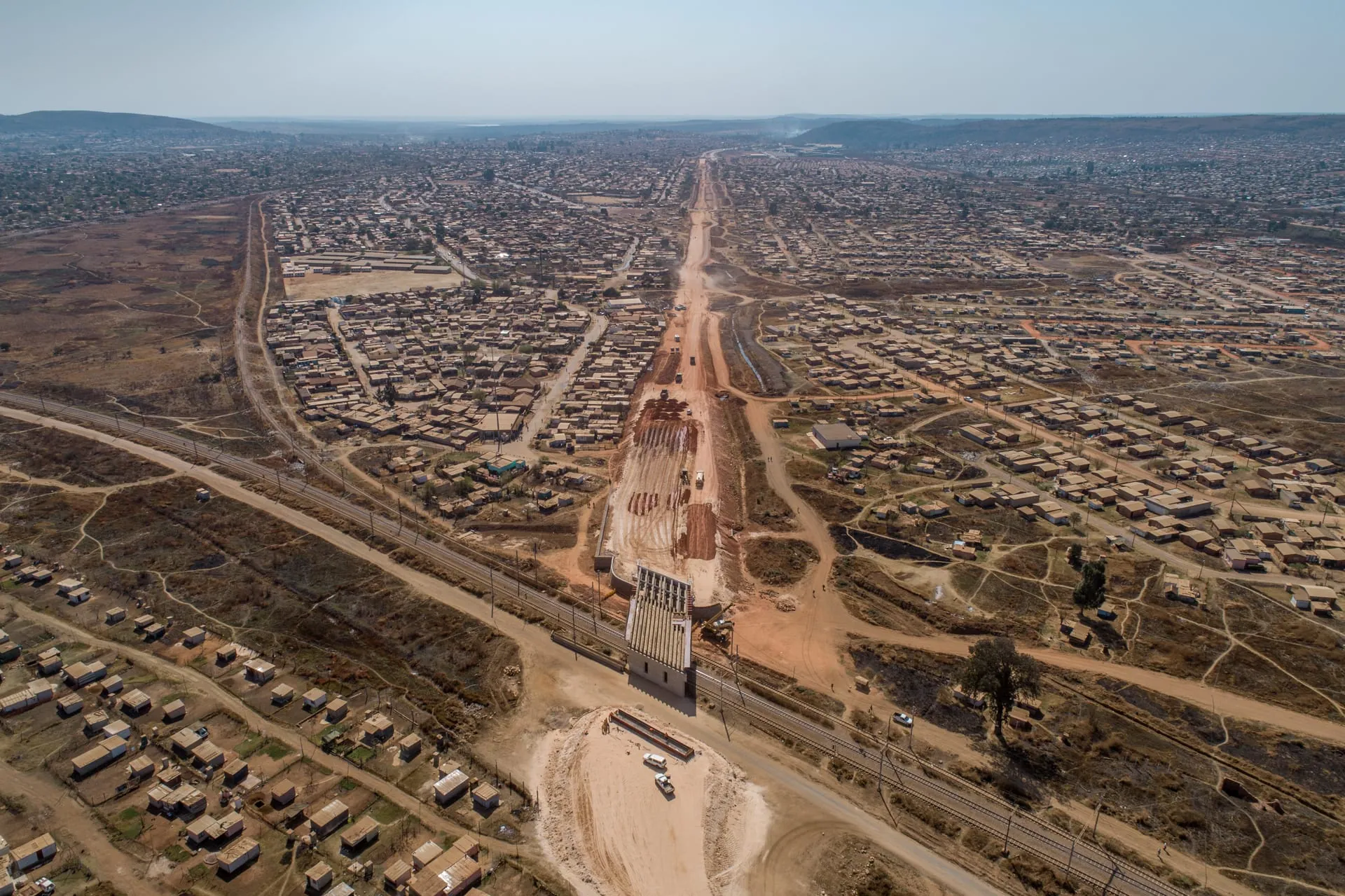
You win road and infrastructure projects from GHA, MoRH, MMDA. Big Push contractors. Mid-large scale (50 to 500 assets). You manage mostly road construction and rehabilitation, sometimes drainage, urban roads, bridge approach works.
In 2026, Ghana's Big Push programme placed road contractors under heavier funding, delivery, and scrutiny pressure. The 2026 national budget allocated GHC 30.8 billion to the programme, more than double the prior year. The Ghana Institution of Engineering called for an independent technical audit of the multi-year programme in April 2026, signalling the public-sector scrutiny contractors are operating under.
Regulatory context last reviewed: 28 May 2026. Sources: Minerals Commission, Reuters, GhIE, Ministry of Finance Budget Statement.
What you care about
GHA monthly progress reporting and joint measurement cycles
The cycle is the cash cycle. Every monthly cert that takes a week longer to prepare is a week longer to payment.
IPC under FIDIC red book
The interim payment certificate is the contractor's commercial output. The contractor with weaker evidence loses when the consultant cuts.
Variation orders and extensions of time
Documentation discipline at the moment of the variation, not reconstructed three months later when the dispute lands.
Cash flow exposure to the government client
Industry-wide arrears periods are real and recent. The contractors who survive the wait are the ones with the strongest operating evidence to protect their forecasted cash position.
Public scrutiny, client reporting pressure, and audit risk
That the operational record must survive. The Auditor-General report, the parliamentary committee, the procurement-process review. None of these arrive on a quiet Friday afternoon when you have time to prepare.
Subcontractor management at scale
A typical Big Push project carries five-plus specialist subcontractors against measurement. The main contractor's evidence layer is what defends both the IPC submission and the deductions from subcontractor payments.
Materials traceability
Asphalt batches, base course tonnage, kerb stone counts. The day variance appears, not the month after.
Weather impact on programme
Wet-weather days cost twice, once in productivity, again in the EOT submission that needs to be defended.
Plant availability
Asphalt plants, batching plants, crushers, pavers. Each one out for service is a section that doesn't get paved this week.
Proof point
A cert submission you can defend to the consultant. A progress report you can produce in days, not weeks. A chainage-by-chainage cost view that matches the BoQ. If the Minister of Roads asks for a cost breakdown by section on your project, how quickly can you produce it?
ARCHETYPE 2 · CIVILS SUBCONTRACTOR
If you're a civils subcontractor.
Specialist on a roadworks project. Drainage crew, kerb-and-channel, road markings, culvert installation, bridge works. 5 to 30 assets if equipped. Paid by main contractor against measurement.
What you care about
Independent measurement of your work
Your version of the section, not just theirs.
Output rates versus internal target
Per-day, per-crew, per-section. Live, not lagged.
Cash flow from the main contractor
Your evidence is your defence against deductions you didn't expect.
Materials supplied versus used
When the main contractor supplies materials to you, the variance is the dispute.
Reputation evidence for the next bid round
The cert history is the case for the next tender.
Proof point
A defendable log of work done at chainage level, time-stamped, attributed. Hand it to the main's QS at end-of-measurement. No reconstruction. No memory dispute.
What we don't fix
Software does not pay your suppliers when GHA is late.
Government contracts in Ghana carry structural cashflow risk. Arrears periods are real and recent. Darikoda compresses cert prep, defends quantities against consultant cuts, and makes the operational record audit-survivable. It does not write the cheque.
What it does do is grow with you. We started from system architecture, not a feature checklist. New contract types, new regulatory regimes, new verticals slot into the existing operating record. Adaptability is native, not a roadmap promise.
Contracts vary. So do the operating mixes that absorb the loss. Some contractors are bleeding through cert-cycle latency. Some through plant utilisation across project portfolios. Some through materials reconciliation. The audit is built to find which one is true for your contract portfolio.
02 / The platform · applied to civils
Three engines, applied to civils.
The same operating-record logic that runs underneath every Darikoda deployment, surfaced in civils' native vocabulary.
Cert preparation speed
The IPC submission is the contractor's commercial output. Structured field evidence at chainage level compresses cert prep from ten people for a month to two people for a week. The cash cycle compresses with it by 14 to 21 days per cycle.
Chainage-level cost visibility
Cost per chainage, cost per linear metre, cost per cubic metre of base course or asphalt. Per section, per crew, per shift. Tracked live so the section that's bleeding margin shows up the day it diverges, not in the post-mortem.
Plant utilisation across road projects
Three concurrent projects. One shared fleet. Which machine should move, which should stay, which is due for service. Cross-project visibility surfaces the redeployment decision before it costs you a paving day.
Where the cert cycle compresses.
Cert preparation under FIDIC red book
Old way
Ten people, one month. Spreadsheets per chainage range. Photos in WhatsApp threads. Materials reconciliation done from delivery dockets stacked on a desk. The submission lands on the consultant's desk three weeks after the work was done.
On Darikoda
Two people, one week. Field evidence already structured at chainage level, time-stamped, attributed. The submission lands at month-end, with photo evidence and PIN-level worker attribution attached.
10 people × 1 month → 2 people × 1 week
cash cycle compresses by 14 to 21 days per cycle.
Joint measurement with the consultant
Old way
Consultant arrives on site. Your foreman walks them through K8+200 to K8+900. The consultant disputes 47 linear metres. Your evidence is the foreman's memory and a handwritten log.
On Darikoda
Same walk. The chainage log opens on the tablet. Each measurement is time-stamped, photographed, attributed to the supervisor who took it. The disputed 47 metres either gets agreed or the consultant produces evidence of their own.
4% average cert cut
on weakly-evidenced quantities. The recovery margin Darikoda defends.
EOT submission after the rainy season
Old way
14 claimed wet-weather days. Six have site logs from the supervisor's notebook. Eight don't. The consultant accepts the six and rejects the eight.
On Darikoda
14 days, 14 structured site-condition logs. Rain. Ground condition. Sub-base saturation. Access constraints. Photographed daily by the site agent. Submitted with the EOT, not reconstructed for it.
~40% → ~95%
EOT defendability lift on observed conditions evidence.
Big Push
Built for the Big Push.
The next Big Push contract benefits from the data captured on this one. Output rates, plant productivity, material consumption ratios, weather-day impact factors: the empirical estimating data that turns the next tender from a guess into a defensible bid. The data does not stay on the project. It compounds.
Built so the record survives the section.
- Every field write saves locally first, syncs when signal returns. Your operators don't wait for 4G.
- Every transaction has a sync state, saved, queued, synced, failed. No more "did it go through?"
- Every action is attributed to a person, role, device, and time. No silent edits to history.
- Shared tablets use PIN-level worker attribution. No one is logged in as someone else.
- Failed syncs create visible issues, not silent gaps.
- Finance and operations see the same record. Your existing accounting or ERP gets fed the per-section truth it cannot produce on its own.

Built so the record survives the section
Native vocabulary
Darikoda speaks the language of your contract environment.
FIDIC red and yellow book. IPC under joint measurement. BoQ-aligned cost tracking. GHA reporting templates. Big Push contractor pipeline. Variation orders and extensions of time. Chainage K0+000 to K-whatever-your-section-ends.
Not as a translation layer over generic construction software. As the native vocabulary of the operating record, because the road contract environment was one of the first realities Darikoda was built for.
Cross-vertical reach
Many civils contractors also operate as internal hire firms.
Supplying machines and fuel to subcontractors against monthly deduction is part of how Big Push projects run. The same per-machine attribution defends IPC quantities to the consultant AND defends deductions from the sub. If that's your model, the deduction-game framing applies directly.
Civils-specific FAQ.
Common questions from government road contractors and civils subcontractors.
Do you replace MS Project or Primavera?
No. MS Project, Primavera P6, Asta Powerproject are programme management tools: what's planned, what's the critical path, what's the float. Darikoda is what actually happened on site, attributed, at chainage level. The two integrate. Your planner keeps Primavera. Your operations team gets Darikoda.
Can Darikoda integrate with Sky Ledge, VisionLink, or Introma trackers we already have?
Yes. GPS tracker output (location, basic utilisation) feeds into the operating record where it adds value. The trackers do their job. Darikoda is the layer that ties machine hours to billable sections, fuel events to cost-per-chainage, downtime to IPC defence. Integration is additive, not exclusive.
How do you handle FIDIC red book joint measurement?
Joint measurement is the moment the contractor's record meets the consultant's. Darikoda is the contractor's record: chainage-level quantity, time-stamped, attributed, with photo evidence. When the consultant disputes a quantity, you have the structured field record to defend it. When you agree, it flows into the IPC submission without re-keying.
Can you support cert preparation for GHA?
Cert preparation speed is the first thing Darikoda compresses. Structured field evidence (chainage quantities, materials consumed, plant hours, manpower attendance) feeds directly into the IPC submission format GHA expects. Cert prep moves from ten people for a month to two people for a week. The cash cycle moves with it.
What if our project has 5+ subcontractors with different contracts?
That's the norm on Big Push projects. Darikoda handles subcontractor coordination at the operating-record level: independent measurement of each sub's work, fuel and material attribution where you supply them, and a defendable trail when the deduction is challenged. Each sub sees their own slice. The main contractor sees the aggregate. Same source.
How does this work during the rainy season programme?
Wet-weather days cost twice: once in productivity, again in the EOT submission that has to be defended. Darikoda captures the daily site condition (rain, ground condition, sub-base saturation, access constraints) as part of the structured field record. When the EOT submission goes to the consultant, the evidence is already there.
What's the minimum project value where Darikoda makes sense?
The threshold is contract structure, not project value. On a FIDIC red book contract with joint measurement and IPC discipline, the maths usually works from the first cert cycle: protecting one disputed quantity per month often covers the pilot fee. On lump-sum projects with weaker measurement discipline, the threshold shifts upward.
We're under audit or scrutiny on a Big Push contract. Can your record survive that?
That's exactly what the operational record is built to do. Every action is time-stamped, attributed to a person and a role, and immutable. No silent edits to history. The record that supports your IPC submission is the same record that supports your audit defence. Same source, same evidence chain.
We supply equipment and fuel to our subcontractors against deduction. What changes?
That model has a dedicated page. The internal cross-hire dynamic is operationally and commercially distinct enough that we built a separate buyer brief for it. Deduction game, working / faulty / not needed pattern, leverage nuance: see the Plant Hire & Fleet Owners page.
What does it cost?
Fixed-fee Build & Activation phase (four weeks, configures the operating record to your contract structure), then per-environment monthly tier once the pilot proves value. The Operational Audit produces the specific number for your portfolio. Book it through the audit page above.
See where your civils operation leaks margin.
The Operational Audit takes 30 minutes. You get a one-page leakage report, civils-specific, that you keep regardless of next steps.
Patterns described here are drawn from extensive field audits and industry research across Ghana's mining, construction, roadworks, and quarry sectors. No specific operator is named or identifiable.