DARIKODA

Operational intelligence

Construction subcontractors in Ghana: defend your measurement

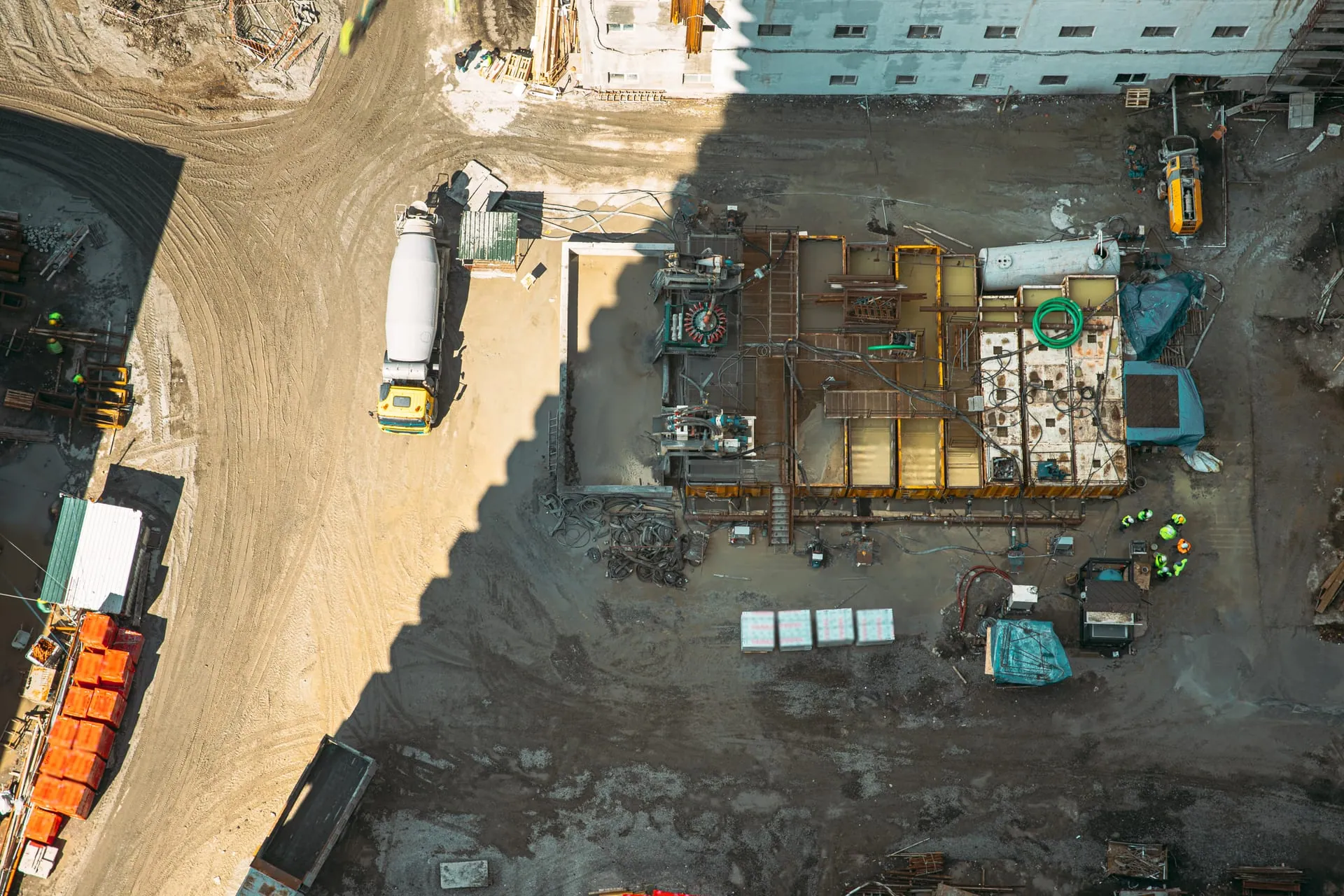
Construction subcontractor crew at work on a Ghana site
Darikoda · Construction subcontractors Ghana

Defend your measurement.

You do the work. Then you defend it against the main contractor's measurement and deductions.

Darikoda gives you the structured evidence to get paid for what you built. Captured at source.

Typical reply within the hour during UK and Ghana business hours

You do the work. Then you defend it against the main contractor's measurement and deductions. Darikoda gives you the structured evidence to get paid for what you built.

Where the measurement walks

The places a construction subcontractor pays the gap between their record and the main's.

  • Quantities you placed versus quantities they measured.

    Per measurement, per day or lump sum. When the main's QS arrives with a tally that does not match yours, the difference walks. Metres laid, tonnes placed, cubes poured need a structured record at the time the work happened, not reconstructed at month-end.

  • Materials supplied vs materials used.

    When the main contractor supplies materials to you, the variance is the dispute. 100 tonnes delivered, 70 became structure. Without a per-section consumption record, the 30-tonne gap reads as your problem regardless of cause.

  • Hours, fuel and operator attribution on rented machines.

    If you rent equipment from the main, you pay by machine hours and absorb fuel deductions. PIN-level operator attribution at the event closes the gap between their tally and your operator's reality.

  • Cash flow exposure to the main contractor.

    Your evidence is your defence against deductions you did not expect. A structured log compresses the time from measurement dispute to resolution, which compresses the time from work to payment.

  • Reputation evidence for the next bid round.

    The cert history is the case for the next tender. Cleanly captured field evidence makes you the subcontractor the main calls first, not the one whose paperwork costs them a week of QS time.

  • Output rates versus internal target.

    Per-day, per-crew, per-section. Live, not lagged. When you can see your own productivity drift the day it happens, you can adjust before it becomes a margin problem.

What changes at the moment of measurement

Three scenarios where structured evidence outranks the main's tally.

Old way

Crew measured 412 metres of drainage on Section 7. The main's QS arrives. He measures 388. You have no time-stamped record. The 24 metres walk. At GHC 800/metre that is GHC 19,200 absorbed on one dispute.

On Darikoda

Each metre laid captured at the section with PIN, GPS, time-stamp and photo. The QS opens the same record you do. The handover happens with structured evidence rather than chalk on a tape.

Per-metre evidence

the unit at which measurement defence becomes possible.

Old way

Main supplies 900 bags cement to Block C. You used 720. They deduct 180. You believe their figure is wrong, but the only counter-record you have is the foreman's memory.

On Darikoda

Cement consumed at the pour, attributed per section, time-stamped, photo of the pour log. The variance question stops being a memory exercise.

Per-pour record

supplied vs used resolved with structured evidence rather than belief.

Old way

Main charges 180 hours for your rented excavator this week. Your operator says 152. You pay the gap because the only counter-record is verbal.

On Darikoda

Operator PIN at start, stop, idle and fuel events. Hour-meter time-stamped with GPS. The deduction conversation happens with structured evidence rather than assertion.

Per-event hour-meter

the unit at which rental-cost defence becomes possible.

Different scenarios. Same underlying gap. Same closing move.

Three engines applied to a subcontracted package

The operating record, framed for the crew that signs the QS log.

ENGINE 01

Independent measurement at the section.

Metres laid, tonnes placed, cubes poured. Captured at the point of work with operator PIN, GPS, time-stamp and photo evidence. Your version of the section, not just theirs.

ENGINE 02

End-of-shift log the main's QS can sign.

Hours, materials, output, faults. All time-stamped, all attributed. Hand it over at end-of-shift. The hours you worked, the metres you laid, the tonnes you placed are the hours, metres and tonnes that get billed.

ENGINE 03

Materials variance record.

When the main supplies materials, the consumption record at section level is the defence against the supplied-vs-used dispute. The variance question stops being a memory exercise.

Proof point

A defendable log of work done you can hand to the main's QS at month-end. Time-stamped. Attributed. No reconstruction. The hours you worked, the metres you laid, the tonnes you placed are the hours, metres, and tonnes that get billed.

Built so the cert handover survives the main's measurement.

Subcontractor monthly cycles live or die on the integrity of the record at the section. Five commitments make that record survive the trip to the main's QS.

  • Every measurement entry saves locally first and syncs when signal returns. Section work does not wait for connectivity.
  • Every operator at the controls leaves a PIN-attributed trail. The metres you laid stay attached to the person who laid them.
  • Every materials event carries a section attribution and photo evidence. The supplied-vs-used variance has a record on your side.
  • Failed syncs at remote sections become visible issues, not silent gaps in the cert pack.
  • The cert export the main's QS expects (PDF, CSV, signed PDF) comes from the same record you used during the week.

If you do nothing

The cost of one more month on the main's tally alone.

Illustrative scenarios at typical Ghana subcontractor scale. The audit produces the specific number for your packages, your scope of supply, and your cert cadence.

Scenario 01

5% short-measurement on monthly section output.

GHC 800/metre × 5% × 400 metres/month measurement gap = GHC 16,000 absorbed per month per package.

On four active packages, that is GHC 64K per month. GHC 768K per year.

Scenario 02

10% materials variance absorbed on supplied-by-main consumables.

GHC 80K monthly main-supplied cement and aggregate × 10% absorbed variance = GHC 8K per month.

GHC 96K per year. One photo per pour closes the evidence gap.

Scenario 03

20 hours per month disputed on a rented machine.

20 hours × GHS 600/hour internal-hire rate = GHS 12K absorbed per month per machine.

On three rented machines, GHS 432K per year. The hour-meter at the event is the recovery path.

Most subcontractors recognise two of three of these in their last cert cycle.

Inside a typical month

What a Darikoda cert cycle looks like for a subcontracted package.

From PIN-attributed shift start to invoice supported by the same record.

  1. Shift start

    Operator logs in at the tablet, PIN-attributed.

    Section, package, hour-meter start. Each crew member at the controls leaves a structured trail from the first minute.

  2. During the shift

    Output and materials captured at the event.

    Metres laid, cement poured, plant hours, fuel receipts. Each entry photo-evidenced, GPS-confirmed, time-stamped against the section.

  3. End of measurement period

    Cert pack ready for the main's QS.

    Hours, output, materials variance exported in the format the QS workflow expects. Disputes happen with evidence, not assertion.

  4. Month-end

    Invoice supported by the same record.

    The cert evidence feeds the invoice. The cash cycle compresses because the dispute window closes earlier.

A note from Theo

You get paid for what you can prove, not what you did.

Construction subcontractors I worked alongside in Ghana share the same operational truth. You get paid for what you can prove, not what you did. The gap between those two numbers is where most subcontractor margin walks. Section measurement, materials consumed, plant hours rented from the main. Each gap closes when the evidence is captured at the section, not reconstructed at month-end. The operating record is what closes it. Per-metre, per-pour, per-hour, PIN-attributed and time-stamped. The QS handover stops being adversarial and starts being structured. That is what we built for construction subcontractors in Ghana.

Theo Ilori, founder of Darikoda

Theo Ilori

Founder, Darikoda. UCL MSc Mechanical Engineering. Formerly GE precision turbines, Caterpillar/Unatrac Ghana & Nigeria.

Construction subcontractor FAQ.

The questions other Ghana construction subcontractors ask in the first call.

We do earthworks for three main contractors. Different operating styles. Does the platform handle that?

Yes. The operating record is the same whether the main contractor is FIDIC red book, lump-sum or daywork-based. The output you log (metres, tonnes, cubes) is yours to keep regardless of the main's measurement process. You hand over what they need in the format they want.

We are labour-only. Do we still need this?

For labour-only subcontractors the use-case is tighter: a time-stamped log of crew hours and output per shift. Attribution per PIN-level worker. Defendable at end-of-shift. That use-case alone covers the difference between disputed and undisputed claims on most monthly cycles.

We rent equipment from the main on a road project. Hours and fuel are their tally. Can we challenge that?

Yes. Operator PIN at the event, hour-meter at start-stop, fuel receipt with photo. When the main's monthly tally arrives, you have the structured record to compare against. Disputes happen with evidence rather than assertion.

We have five operators across three sections. Does the platform attribute per person?

Yes. Shared tablets use PIN-level worker attribution so no one is logged in as someone else. The hours, fuel and output stay attached to the person who did them. That is the basis for fair pay, coaching, recognition and dispute defence.

How long does it take to be ready for the first monthly measurement cycle?

Four weeks of Build & Activation configures the operating record to your crews, sections and main-contractor reporting cadence. From go-live, the structured evidence is in place for the first month's measurement.

Want the leakage map for your subcontracted operation?

30 minutes on WhatsApp. You keep the map regardless of next steps.

← Back to construction operations overview

Patterns described here are drawn from extensive field audits and industry research across Ghana's mining, construction, roadworks, and quarry sectors. No specific operator is named or identifiable.

Message Theo to book the audit