
Haul cycle reporting records loading, haul, queue, dumping and return as one production sequence. A trip count tells you how often a truck moved, and the cycle record shows where the time went.
On this page
A haul truck completes ten trips in a shift and still leaves management with very little useful information. The trip count establishes that movement occurred. It does not explain what the movement produced.
The trip count on its own does not answer any of this.
- How long each cycle took.
- Where the time was lost.
- How long the truck waited to load.
- How long it queued at the dump point.
- Whether the truck carried the expected load.
- Which operator was on the machine.
- Which excavator or loader was feeding it.
- Which route it followed.
- Whether the delay came from the truck, the loading equipment, the road condition or the site sequence.
For mining and heavy fleet operations in Ghana, that distinction matters because production is built from repeated cycles. Load. Haul. Dump. Return. Repeat. A small difference inside one cycle becomes a large difference once it repeats across dozens or hundreds of cycles.
So the useful record is not that the truck completed 24 trips. It is that the truck completed 24 cycles, each with a measurable sequence, and that the record shows where time and productive capacity were gained or lost.
The operational problem
Haulage operations generate enormous amounts of movement and surprisingly little structured operational information. A production report shows something close to this:
- Number of trucks.
- Number of trips.
- Tonnes moved.
- Shift hours.
- Total production.
Those figures are useful. They also hide the operational reason sitting behind the result.
Consider two trucks completing the same number of trips. Truck A completes each cycle consistently. Truck B spends significant time waiting for the loader, queuing at the dump point, slowing on a poor section of haul road, waiting behind another truck and repositioning at the loading face.
At the end of the shift both show the same trip count. The daily report makes the two look identical when their operating performance is not.
Why it happens
Trip counts are easier to collect than cycle context
Counting trips is straightforward. Understanding each trip requires more structure, because a proper cycle record has to connect the separate stages of the movement.
Different parts of the cycle are recorded separately
The excavator or loader operator keeps one record. The haul trucks have another. Dispatch has another. The dump location runs its own production report. When those records are not connected, management cannot see the full cycle.
Waiting time disappears into the shift
A truck that waits 15 minutes before loading still completes a normal number of trips over a long shift. The lost time is real, and it disappears into the total hours.
Delays are recorded too broadly
A report says: delay, 45 minutes. That is not enough. The useful question is 45 minutes caused by what?
- Loader unavailable.
- Road congestion.
- Dump queue.
- Fuel.
- Operator issue.
- Maintenance.
- Weather.
- Blasting.
- Work-front change.
- Another operational instruction.
Different causes require different responses.
Why it costs more than you think
Lost production
Fewer completed cycles mean less material moved inside the available shift.
Higher cost per tonne
Fixed operating cost spreads over lower production, so every tonne carries more of it.
Underutilised trucks
A truck is technically available while spending too much of the shift waiting for another part of the operation.
Loader imbalance
Repeated queues at the loading point call for a check of loading capacity, truck allocation and the loading process. Queues at the dump point call for a check further downstream. Record where trucks wait before deciding what to change.
More fuel per unit of production
Longer cycles increase the fuel consumed for every tonne moved.
Poor fleet allocation
Management adds trucks when the real bottleneck is loading capacity, road condition or dumping capacity.
That produces a familiar heavy-fleet outcome. More assets get added to compensate for an operational constraint nobody has identified.
The haul cycle
A useful haul-cycle model distinguishes the major stages of the movement rather than treating the shift as one block of time.
1. Positioning
The truck reaches the loading point and positions for loading.
2. Loading
Material is loaded. The record covers the start time, the end time, the loading equipment, the truck, the operator and the location where that is relevant.
3. Loaded haul
The truck travels from the loading point to the dump or destination. The record covers the departure time, the arrival time, the route or work area, the distance where that is relevant, and the load information where it is available.
4. Dumping
The truck reaches the destination and unloads. The record covers the arrival, the queue time where there is one, the dumping time, the destination and the completion.
5. Empty return
The truck returns to the loading area. The record covers the departure, the return, the route and any unusual delay.
The cycle then starts again. That sequence is the operational record sitting behind the production number.
Example: another truck joins the loading queue
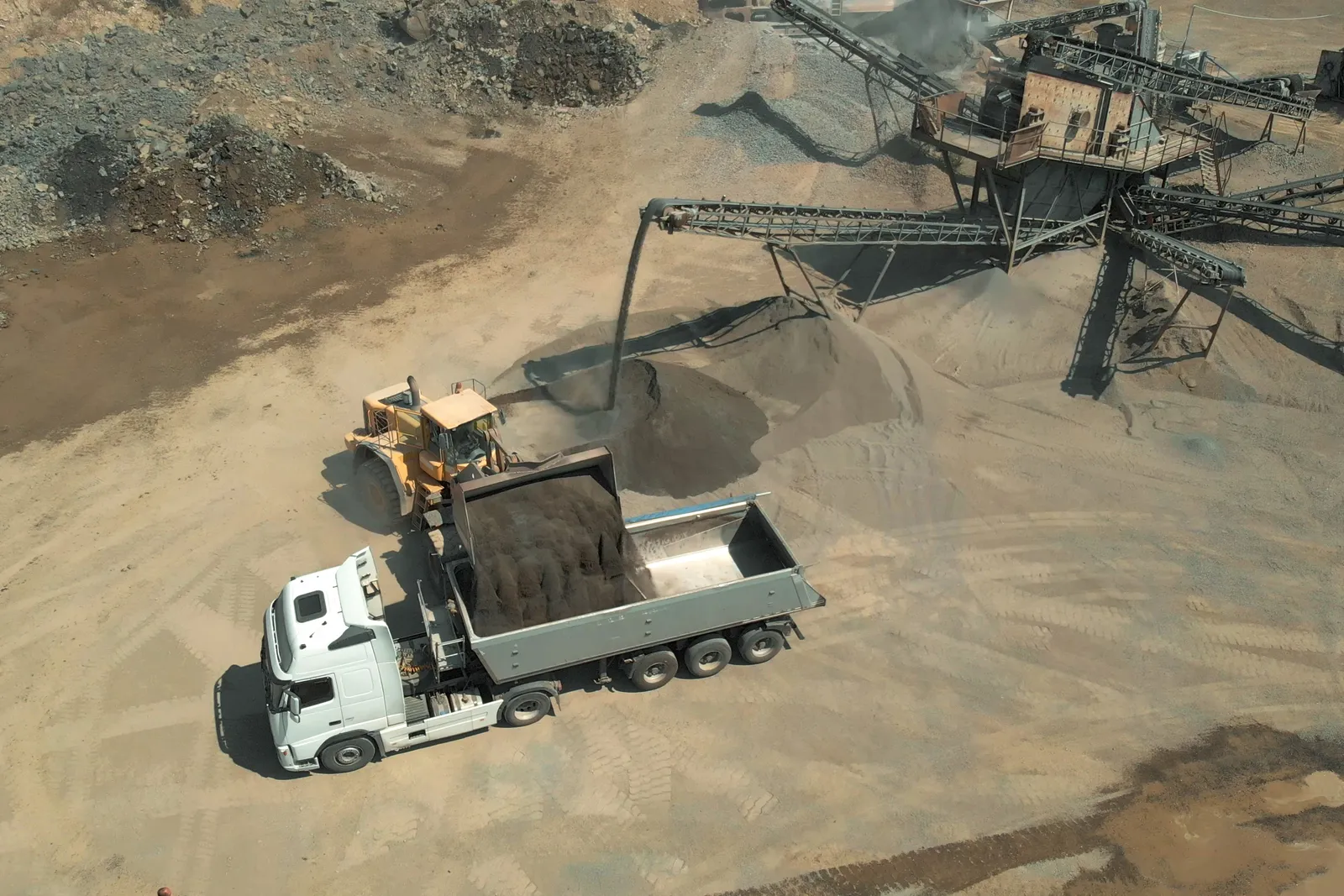
A mining contractor operates several rigid dump trucks on a haul route between an excavation area and a dumping location. Management expects production to increase after adding another truck to the fleet.
After the additional truck is deployed, total production barely changes. The first report shows more truck-hours, more fuel consumed and roughly the same production. The instinct is to blame the new truck.
A structured cycle review shows something different. The trucks are spending increasing amounts of time waiting at the loading face. The loader is the constraint, so adding another truck increases the queue rather than the output.
The problem was not a shortage of haulage capacity. It was a mismatch between loading capacity and haulage capacity. That distinction matters because the correct response is a change to the loading sequence, the truck allocation, the loading times, the dispatch or the work front, rather than buying or hiring another truck.
Record each stage of the cycle
Measure each stage of the cycle instead of treating the shift as one block of time. They can answer how long loading took, how long the loaded haul took, how long the truck waited before dumping, how long dumping took and how long the empty return took.
They can also place the recurring delay against the truck, the operator, the shift, the work front, the route, the loading unit and the destination.
That moves management from production was low to cycle time increased because loaded trucks were queueing at the dump point. The first is a result. The second is an operational decision.
Cycle time is not the same as production
A shorter cycle is not automatically better. A truck completes cycles quickly and carries less material on each one, which is why cycle reporting belongs next to output wherever the operation can measure it.
The useful relationships run from cycle time to loads per shift, to tonnes moved, to fuel consumed, to cost per tonne. The aim is to understand the relationship between time, movement and output. That matters most in mining, where cost per tonne is a core management measure.
Queue time deserves its own record
Queue time gets treated as an unavoidable part of mining. That does not make it unimportant. A truck waiting for another process is an operational event, and the record should say which one.
- Waiting to load.
- Waiting to dump.
- Waiting for road clearance.
- Waiting for instruction.
- Waiting for another machine.
- Waiting because the work front is not ready.
The difference between a 15-minute wait caused by the loader and a 15-minute wait caused by a dump-point constraint is operationally significant, because the remedy is different.
Best practices
Capture cycle events at source
Do not reconstruct the sequence at the end of the shift. The longer the gap between the event and the record, the harder it becomes to establish an accurate sequence.
Identify the truck and operator
Every cycle should be attributable to a truck, an operator, a shift and a work area.
Record the loading unit
Identify the excavator, shovel or loader involved. That is what exposes a loading-side constraint instead of leaving it to be blamed on the trucks.
Record the destination
A truck serving several dump points or work fronts needs a destination on the record before cycle comparisons mean anything.
Separate planned and unplanned delays
Not every waiting period is a failure. Some delays are planned operational holds. Others point at a constraint that needs intervention, and the two should not share a category.
Track recurring delays
One unusual cycle is not a problem. A repeated pattern across the same route, shift or machine is the finding worth acting on.
Connect cycle data to cost
Cycle reporting becomes commercially useful once it is linked to fuel, maintenance, operator, production, truck, route, project and cost per tonne.
What a haul cycle record should contain
A practical operational record covers the following.
- Truck ID. Identify the asset.
- Operator. Attribute performance.
- Shift. Compare periods.
- Loading point. Identify the source.
- Loading unit. Identify a loading-side constraint.
- Load start. Establish when loading began.
- Load complete. Calculate loading duration.
- Haul departure. Start the loaded movement.
- Dump arrival. Calculate loaded haul time.
- Queue start. Identify waiting at the destination.
- Dump start. Establish the dump delay.
- Dump complete. Establish dumping duration.
- Empty return. Measure the return leg.
- Delay reason. Explain the lost time.
- Destination. Compare routes and work areas.
- Load quantity. Connect time to production.
- Total cycle. Measure overall cycle efficiency.
The exact fields vary according to the operation. The principle stays the same. The cycle should explain itself.
Connect movement to the work record
GPS tracking shows where a haul truck travelled. Telematics provides useful information about movement and machine state. Dispatch systems manage fleet movement. Production systems report tonnes. A management team still needs the operational context that connects those pieces together.
A map tells you that a truck travelled from A to B. A cycle record tells you that the truck loaded at A, waited six minutes before departure, took 18 minutes to reach B, queued 12 minutes before dumping, dumped for four minutes, returned empty in 15 minutes, and lost a further eight minutes waiting for the loading face to clear.
The second record is the one management can act on.
How Darikoda solves it
Darikoda provides the operational-record layer that connects equipment activity to the context around it. For heavy fleet operations, a haul record connects the truck, the operator, the shift, the loading activity, the haul movement, the destination, the delays, the approvals, the production and the supporting evidence.
This helps you see where the production chain is slowing down.
For mining contractors that means stronger evidence behind hours, production and fleet performance, with truck-level cost per tonne, operator attribution, fuel evidence and mechanical availability sitting on the same operating record rather than in four separate places.
Operators looking at this from the operating-record, mining, fleet or downtime angle can read the role-specific views below.
From cycle time to cost per tonne
The purpose of haul-cycle reporting is not a better dispatch report. It is better operational decisions.
Two trucks run the same haul route. Truck A records a shorter average cycle, fewer queues and lower fuel consumption for the output it delivers. Truck B records a longer loading delay, more idle minutes, more fuel consumed and fewer productive cycles.
A fleet-level average hides that difference. A truck-level operating record exposes it, and that information feeds the decisions that follow.
- Operator coaching.
- Maintenance decisions.
- Dispatch changes.
- Route improvements.
- Work-front planning.
- Truck allocation.
- Loading-unit allocation.
- Fleet sizing.
- Contract pricing.
- Cost-per-tonne management.
That is the point at which haul-cycle reporting becomes management intelligence rather than production counting.
The real test
Adding a truck to a queue does not add production. It adds a truck to the queue. The operating record is what tells management which of the two is actually happening.
Key takeaways
A haul cycle is a sequence of operational events, and the trip count is only the last of them. Recording the sequence is what turns movement into something management can act on.
- A trip count alone does not explain haulage performance.
- A haul cycle should be recorded as a sequence of operational events.
- Loading, hauling, dumping, returning and waiting time should stay distinguishable from each other.
- Queue time needs a reason, not just a duration.
- Cycle time should be connected to output wherever the operation can measure it.
- Truck, operator, shift, loading unit and destination provide the context that makes a cycle comparable.
- Adding more trucks does not increase production when another part of the cycle is the constraint.
- Truck-level records expose differences that disappear inside fleet averages.
- Haul cycle reporting becomes commercially useful once it is connected to fuel, utilisation and cost per tonne.
- The strongest record is created at the event, not reconstructed at month-end.
Frequently asked questions
- What is haul cycle reporting?
- Haul cycle reporting records and analyses the sequence of events involved in moving material, including loading, loaded travel, queuing, dumping and empty return.
- What is haul cycle time?
- Haul cycle time is the time required to complete a full movement cycle, from the start of one haul sequence through to the point where the truck is ready to begin the next one. The exact definition should be standardised within the operation.
- Why does queue time matter?
- Queue time represents time when a truck is available but waiting for another part of the operation. Repeated queues reduce fleet productivity without ever appearing as mechanical downtime.
- How do you measure haul truck productivity?
- A useful measure combines cycle information with output. Depending on the operation, that includes cycles per shift, tonnes moved, average cycle time, utilisation and cost per tonne.
- What causes long haul cycles?
- Common causes include loading delays, poor haul-road conditions, congestion, long distances, dump-point queues, work-front changes, operator delays and other operational constraints.
- Why should haul cycles be recorded by truck?
- Fleet averages hide differences between individual assets. Truck-level records show which machines consistently experience longer cycles or lower output.
- Why is operator attribution important?
- Operator attribution helps management identify performance patterns fairly, particularly when two operators are using comparable equipment under similar operating conditions.
- Can GPS tracking measure haul cycles?
- GPS provides useful movement and location data. A complete cycle report also needs operational context such as loading, queue, dumping, approval and delay reasons.
- How does haul-cycle reporting improve cost per tonne?
- It lets management connect time and fleet activity to the output produced, which makes it easier to identify the trucks, routes or process constraints that increase the cost of moving each tonne.
- Does more haulage capacity always increase production?
- No. When loading, dumping, road conditions or another part of the cycle is the constraint, adding trucks increases waiting rather than productive output.
Find where your operation is losing money
Operational problems are easier to solve when they are captured at source. The free 30-minute Operational Audit identifies weak workflows, missing operational records, delayed approvals and commercial leakage before they become expensive production constraints. You keep the one-page map regardless of next steps.
Read the operating view for your role